
Combination guide
Can you take Vitamin D and Vitamin K together?
Clear guide to benefits, risks, and synergy when combining Vitamin D and Vitamin K.
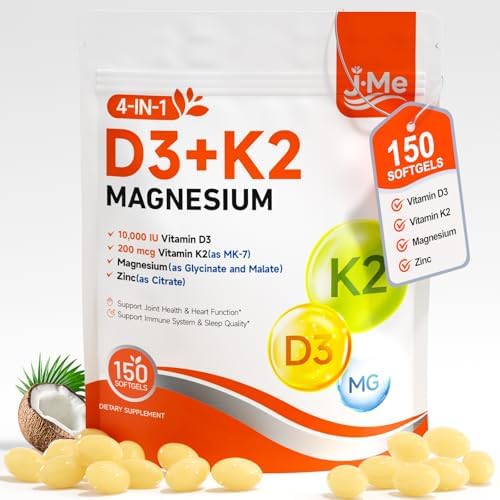
Vitamin D3 + K2 MK-7 with Magnesium — Bone & Immunity
High-potency D3 paired with K2 and magnesium for absorption you can feel.
Vitamin D3 + K2 MK-7 with Magnesium — Bone &…
Check price on AmazonTaking Vitamin D and Vitamin K together creates a powerful partnership for calcium management, where Vitamin D boosts absorption from the gut into the blood, and Vitamin K directs that calcium to bones while keeping it out of arteries and soft tissues. This complementary action reduces risks like arterial calcification that can occur with high Vitamin D alone, supported by studies on bone density and cardiovascular health. suggesting a rating of 4 out of 5.
The Combined Strategy
By combining Vitamin D and Vitamin K, you build a comprehensive defense for skeletal strength and vascular health. Vitamin D ramps up calcium uptake from your diet to fuel bone building, while Vitamin K ensures that calcium lands in the right places, like bones and teeth, instead of building up in arteries. This dual-action strategy covers both the supply and smart distribution of calcium, making it ideal for anyone focused on long-term mobility and heart protection in their wellness routine.
Body Compatibility
Both are fat-soluble vitamins absorbed in the small intestine with the help of dietary fats, entering the bloodstream via chylomicrons. Vitamin D travels to the liver for initial conversion and kidneys for full activation, while Vitamin K heads primarily to the liver for clotting proteins and extrahepatic tissues for bone-related functions. Their separate processing routes mean no competition for absorption sites or enzymes, allowing your body to metabolize them efficiently without digestive upset or reduced uptake.
How They Interact
Vitamin D binds to receptors in intestinal cells and bones to increase calcium transport and resorption. Vitamin K activates specific proteins through carboxylation, like osteocalcin for bone mineralization and matrix Gla protein for preventing vascular calcification. These distinct yet aligned mechanisms support calcium homeostasis without overlap or conflict, actually amplifying each other's benefits for balanced mineral use.
Disclaimer: Some links on this site are affiliate links. As an Amazon Associate, qualifying purchases may earn us a commission. This content is for informational purposes only and is not medical advice.