
Combination guide
Can you take N-Acetyl Cysteine (NAC) and Phosphatidylcholine together?
Clear guide to benefits, risks, and synergy when combining N-Acetyl Cysteine (NAC) and Phosphatidylcholine.
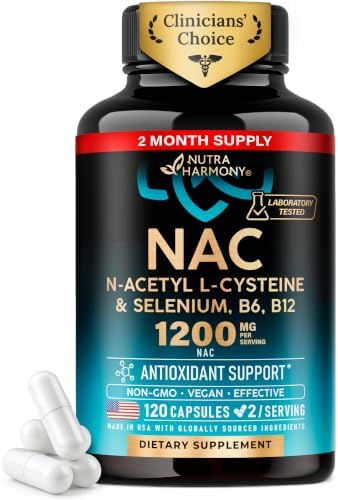
NAC with Selenium, B6 & B12 — Antioxidant Defense
L-Cysteine — check price on Amazon.
NAC with Selenium, B6 & B12 — Antioxidant Def…
Check price on AmazonTaking N-Acetyl Cysteine (NAC) and Phosphatidylcholine together offers high compatibility with complementary benefits, particularly for liver health and cellular protection. NAC boosts glutathione production to combat oxidative stress, while Phosphatidylcholine strengthens cell membranes and aids fat metabolism in the liver. Their distinct yet supportive roles enhance overall detoxification and resilience without interference, suggesting a rating of 4 out of 5.
The Combined Strategy
By combining N-Acetyl Cysteine (NAC) and Phosphatidylcholine, you create a powerful duo for long-term wellness that tackles oxidative damage and structural cellular health simultaneously. NAC steps in to replenish vital antioxidants like glutathione, shielding your body from daily toxins and inflammation. Meanwhile, Phosphatidylcholine fortifies cell membranes and supports liver function by improving fat processing and choline availability. This multi-layered approach covers immediate detox needs alongside sustained membrane integrity, making it ideal for anyone optimizing liver and brain health in their routine.
Body Compatibility
The body processes N-Acetyl Cysteine (NAC) and Phosphatidylcholine through entirely separate pathways, ensuring smooth handling without competition. NAC, being amino acid-derived, dissolves readily in water and gets absorbed quickly in the small intestine, heading straight to the liver for glutathione conversion. Phosphatidylcholine, a fat-based phospholipid, requires bile salts for emulsification into micelles, then travels via the lymphatic system as part of chylomicrons into the bloodstream. These distinct routes—aqueous for NAC and lipid for Phosphatidylcholine—prevent any metabolic bottlenecks or absorption clashes, allowing both to reach their targets efficiently.
How They Interact
N-Acetyl Cysteine (NAC) primarily works by supplying cysteine to ramp up glutathione synthesis, neutralizing free radicals and supporting detoxification enzymes across cells. Phosphatidylcholine, on the other hand, integrates into phospholipid bilayers to maintain membrane fluidity and provides choline for neurotransmitter production and lipid transport. While NAC focuses on intracellular antioxidant defense, Phosphatidylcholine enhances delivery systems and structural support, indirectly aiding NAC's effectiveness by promoting healthier cell barriers. Their non-overlapping mechanisms allow seamless coexistence, with potential mutual reinforcement in liver cells where both contribute to resilience against stress.
Disclaimer: Some links on this site are affiliate links. As an Amazon Associate, qualifying purchases may earn us a commission. This content is for informational purposes only and is not medical advice.