Combination guide
Can you take Collagen Type 1 and N-Acetylglucosamine together?
Clear guide to benefits, risks, and synergy when combining Collagen Type 1 and N-Acetylglucosamine.
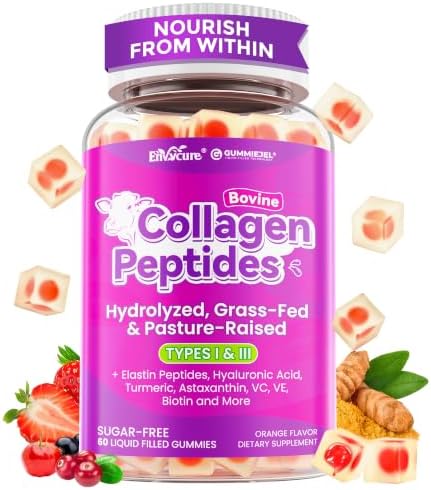
Collagen Peptides Gummies with Biotin & Glutathione
Peptides From Rice — check price on Amazon.
Collagen Peptides Gummies with Biotin & Gluta…
Check price on AmazonTaking Collagen Type 1 and N-Acetylglucosamine together provides high synergy for skin and joint health, as Collagen Type 1 delivers building blocks for structural proteins while N-Acetylglucosamine supports the production of hyaluronic acid and other molecules that hydrate and cushion those structures. Their complementary roles in the extracellular matrix enhance each other's effectiveness without competition, processed safely through separate pathways in digestion and absorption. This dual action makes them an excellent pair for connective tissue support, suggesting a rating of 4 out of 5.
The Combined Strategy
By combining Collagen Type 1 and N-Acetylglucosamine, you create a comprehensive plan for maintaining youthful skin and flexible joints. Collagen Type 1 acts as the main framework, supplying amino acids like glycine and proline to rebuild skin elasticity and joint cartilage. Meanwhile, N-Acetylglucosamine fuels the creation of hyaluronic acid, which locks in moisture and lubricates tissues. Together, they cover structure and hydration, offering a balanced routine that supports active lifestyles and aging gracefully.
Body Compatibility
Your body processes these supplements along distinct paths, starting with digestion in the stomach and small intestine. Collagen Type 1 breaks down into small peptides and amino acids, which enter the bloodstream to reach skin and joint cells. N-Acetylglucosamine absorbs more directly into the blood, traveling to cells that assemble it into larger sugar chains. These separate 'lanes' prevent any overload or competition for transporters, allowing both to reach their targets efficiently without digestive strain.
How They Interact
Collagen Type 1 works by providing raw materials that fibroblasts use to weave strong fibers in skin and tendons. N-Acetylglucosamine, on the other hand, serves as a building block for glycosaminoglycans like hyaluronic acid, which surround and stabilize those fibers. Their mechanisms complement each other in the extracellular matrix, where collagen forms the scaffold and NAG adds the gel-like cushion. This non-overlapping synergy lets them enhance tissue integrity together without clashing.
Disclaimer: Some links on this site are affiliate links. As an Amazon Associate, qualifying purchases may earn us a commission. This content is for informational purposes only and is not medical advice.