Combination guide
Can you take Collagen Type 1 and Collagen Type V together?
Clear guide to benefits, risks, and synergy when combining Collagen Type 1 and Collagen Type V.
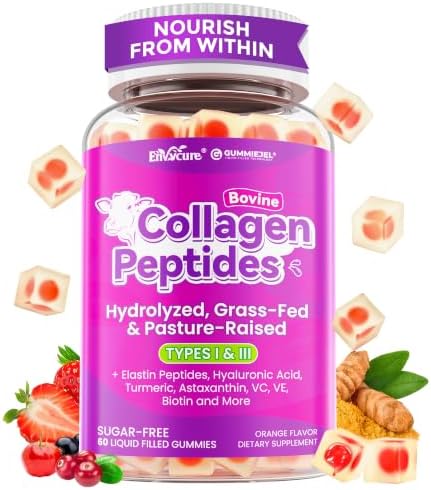
Collagen Peptides Gummies with Biotin & Glutathione
Peptides From Rice — check price on Amazon.
Collagen Peptides Gummies with Biotin & Gluta…
Check price on AmazonTaking Collagen Type 1 and Collagen Type V together offers high synergy because they naturally co-assemble in the body to form well-structured connective tissue fibrils, with Type V regulating the size and organization of Type I fibers for better tissue integrity. Both are digested into peptides without competing for absorption, making them safe and efficient to combine for skin, hair, and joint health. This complementary action mimics the body's own collagen matrix, enhancing overall structural support and suggesting a rating of 4 out of 5.
The Combined Strategy
By combining Collagen Type 1 and Collagen Type V, you create a dual-action approach to connective tissue health that covers both bulk structural support and precise fibril regulation. Collagen Type 1 delivers the primary building blocks for strong skin, bones, and joints, handling the heavy lifting of elasticity and tensile strength. Meanwhile, Collagen Type V steps in to fine-tune fibril diameter and assembly, preventing overly thick or irregular fibers that could weaken tissues over time. This partnership supports a comprehensive wellness routine, from smoother skin to resilient hair.
Body Compatibility
Your digestive system breaks down both Collagen Type 1 and Type V into small peptides and amino acids during digestion in the stomach and small intestine. These peptides travel through the bloodstream without blocking each other, as they use the same amino acid transporters but in non-competitive amounts typical of supplements. Once absorbed, they reach target tissues like skin and hair follicles via circulation, where the body incorporates them seamlessly into existing collagen networks. This parallel processing ensures no metabolic bottlenecks or overload.
How They Interact
Collagen Type 1 forms the long, thick fibrils that provide mechanical strength in tendons, skin, and bones by self-assembling into rope-like structures. Collagen Type V, present in smaller amounts, integrates into these fibrils to control their diameter and spacing, ensuring uniform and functional tissue architecture. Their mechanisms complement rather than overlap, as Type V acts as a regulator during fibrillogenesis without disrupting Type 1's core polymerization. This natural teamwork allows them to enhance each other's performance in rebuilding extracellular matrix.
Disclaimer: Some links on this site are affiliate links. As an Amazon Associate, qualifying purchases may earn us a commission. This content is for informational purposes only and is not medical advice.