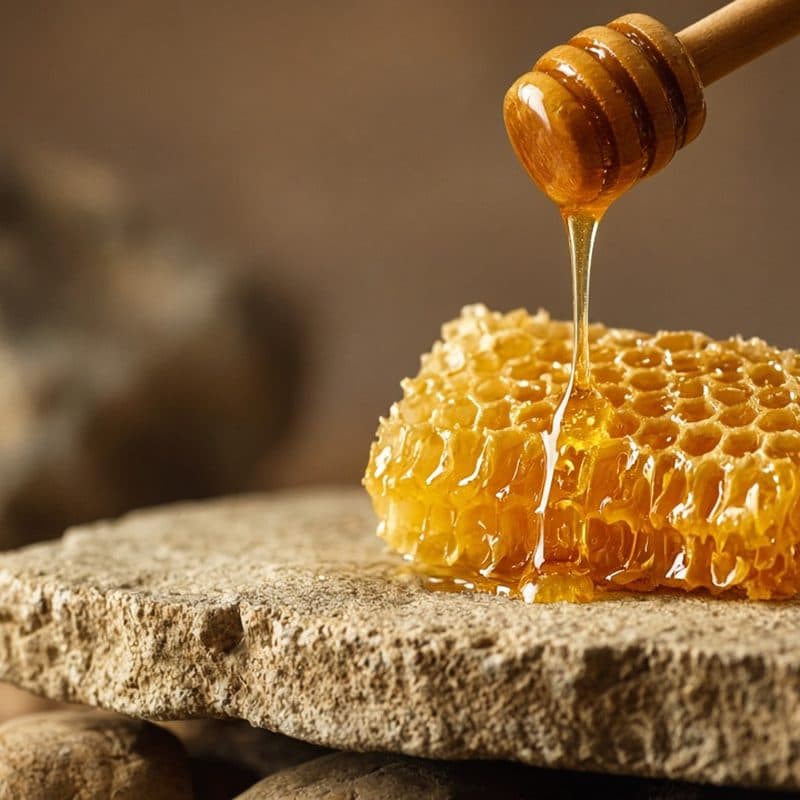
Propolis is a resinous substance collected by honey bees from tree buds and other botanical sources. Bees use it to seal cracks in their hives, strengthen honeycomb structures, and maintain a sterile environment. This natural compound is often referred to as "bee glue" due to its adhesive properties.
Propolis composition varies depending on the plant sources available to bees, but typically includes resins, beeswax, essential oils, and pollen. These components combine to create a complex mixture containing vitamins, minerals, and bioactive compounds. Its unique blend of ingredients contributes to various traditional and modern applications, particularly in natural health practices.
Propolis has been used for centuries in folk medicine across different cultures. It is most commonly associated with supporting immune function and promoting wound healing. Its antimicrobial and anti-inflammatory properties are considered beneficial for soothing minor throat irritations and mouth ulcers. Many natural health products incorporate propolis for these purposes.
Research suggests propolis may possess antioxidant effects that help protect cells from damage. It is frequently used in topical formulations for its potential to accelerate skin repair and reduce inflammation, such as in creams for minor cuts or burns. Some evidence indicates it may also support oral health by maintaining a balanced environment in the mouth.
While propolis is generally well-tolerated, individuals with known bee product allergies should exercise caution. It is most beneficial when used as a complementary natural remedy for minor health concerns, such as supporting the body's natural defenses during seasonal changes or aiding recovery from minor skin abrasions. Its versatility has led to its inclusion in various health supplements and topical treatments worldwide.
Effectiveness and Risk Overview
Condition | Effectiveness | Details |
|---|---|---|
| Antioxidant Activity | Propolis is rich in antioxidants, and its antioxidant activity is well-supported by in vitro and in vivo studies, showing significant protection against oxidative damage. | |
| Wound Healing | Propolis has been shown to enhance wound healing through its antimicrobial and anti-inflammatory properties, supported by clinical trials and in vivo studies. | |
| Immune System Support | Propolis has been shown to enhance immune function through various mechanisms, including stimulation of antibody production and activation of immune cells. | |
| Inflammation | The anti-inflammatory properties of propolis have been well-documented in preclinical studies, showing significant reduction in inflammatory markers. | |
| Oxidative Stress Reduction | Propolis contains antioxidants that reduce oxidative stress, as demonstrated in various in vitro and in vivo studies. | |
| Upper Respiratory Tract Infections | Propolis has antimicrobial properties that may help in reducing the severity and frequency of upper respiratory tract infections, supported by some clinical evidence. | |
| Gut Health | Propolis has been shown to have prebiotic effects and protect against gut pathogens, though more human studies are needed to confirm its efficacy. |