
Triméthylglycine

Guide du principe actif

TMG : bienfaits, posologie et méthylation

La triméthylglycine (TMG) est un composé trouvé dans divers aliments, également connu sous le nom de bétaïne. Elle est impliquée dans le processus de méthyla…

La triméthylglycine (TMG) est un composé trouvé dans divers aliments, également connu sous le nom de bétaïne. Elle est impliquée dans le processus de méthylation du corps, aidant à convertir l'homocystéine en méthionine.

Editor's pick
#Sponsored
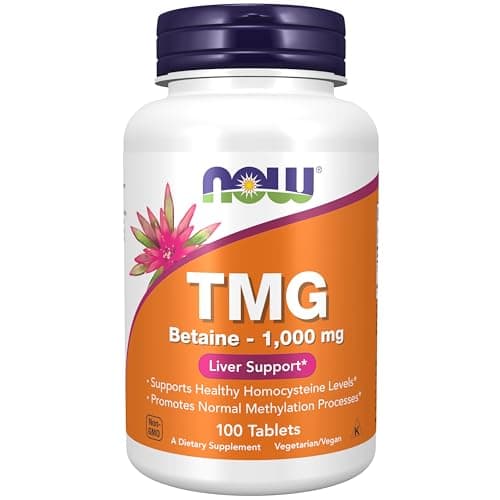
NOW TMG Trimethylglycine (Betaine Anhydrous) 1,000 mg, 100 Tablets

NOW TMG Trimethylglycine (Betaine Anhydrous) 1,000 mg, 100 Tablets

TMG (trimethylglycine) 1,000 mg per tablet. Check price on Amazon.

TMG
Trimethylglycine
Betaine anhydrous
Voir le prix sur Amazon

NOW TMG Trimethylglycine (Betaine Anhydrous)…

Voir le prix sur Amazon

Aperçu de l'Efficacité et des Risques

Condition
Efficacité
Détails
Élevation de l'homocystéine
Trimethylglycine (TMG), also known as betaine, has been shown to significantly lower homocysteine levels in the blood. Elevated homocysteine is associated with cardiovascular risk and neurological disorders. Clinical studies have demonstrated that TMG supplementation can reduce homocysteine levels, thereby potentially reducing the risk of cardiovascular diseases and other related conditions.
Santé cardiovasculaire
By lowering homocysteine levels, TMG contributes to cardiovascular health. High homocysteine is a risk factor for cardiovascular disease, including atherosclerosis and thrombosis. The reduction of homocysteine through TMG supplementation is supported by clinical evidence, suggesting a beneficial effect on cardiovascular health.
Santé du foie
TMG is involved in the methylation process and has been shown to support liver health, particularly in cases of fatty liver disease. It acts as a methyl donor, aiding in the metabolism of fats and potentially reducing liver fat accumulation. Clinical studies have indicated that TMG can improve liver function in certain conditions.
Détoxification
TMG plays a role in methylation processes, which are crucial for detoxification pathways in the body. It helps in the conversion of homocysteine to methionine, supporting the body's detoxification processes. While direct evidence for its detoxification effects is emerging, its role in methylation supports its potential benefits.
Performance athlétique
Some studies suggest that TMG may improve athletic performance by potentially reducing homocysteine levels and improving muscle function. However, the evidence is not as strong or consistent as for its effects on homocysteine or liver health, and more research is needed to confirm its efficacy in this area.

Voir le prix sur Amazon →#Sponsored

Questions fréquentes

Quels sont les avantages de Triméthylglycine ?

Soutient la santé cardiaque. La TMG aide à réduire les niveaux d'homocystéine, ce qui est associé à un risque réduit de maladie cardiovasculaire. Améliore la performance athlétique. La TMG peut aider à améliorer l'endurance musculaire et à réduire la fatigue pendant l'exercice. Pourrait aider à la santé du foie. La TMG a été montrée pour réduire la graisse du foie et l'inflammation dans certaines études.

Quels sont les risques de Triméthylglycine ?

Pourrait interagir avec certains médicaments. La TMG peut interagir avec certains médicaments, tels que les anticoagulants, et affecter leur efficacité ou augmenter le risque d'effets secondaires.

Pour quelles affections Triméthylglycine est-il utilisé ?

Élevation de l'homocystéine, Santé cardiovasculaire, Santé du foie, Détoxification, Performance athlétique

Quels sont les effets de Triméthylglycine sur Élevation de l'homocystéine ?

Trimethylglycine (TMG), also known as betaine, has been shown to significantly lower homocysteine levels in the blood. Elevated homocysteine is associated with cardiovascular risk and neurological disorders. Clinical studies have demonstrated that TMG supplementation can reduce homocysteine levels, thereby potentially reducing the risk of cardiovascular diseases and other related conditions.

Quels sont les effets de Triméthylglycine sur Santé cardiovasculaire ?

By lowering homocysteine levels, TMG contributes to cardiovascular health. High homocysteine is a risk factor for cardiovascular disease, including atherosclerosis and thrombosis. The reduction of homocysteine through TMG supplementation is supported by clinical evidence, suggesting a beneficial effect on cardiovascular health.

Quels sont les effets de Triméthylglycine sur Santé du foie ?

TMG is involved in the methylation process and has been shown to support liver health, particularly in cases of fatty liver disease. It acts as a methyl donor, aiding in the metabolism of fats and potentially reducing liver fat accumulation. Clinical studies have indicated that TMG can improve liver function in certain conditions.

Aucune combinaison spécifique trouvée pour Triméthylglycine pour le moment.

Avis de non-responsabilité : Certaines des liens de ce site sont des liens d'affiliation. En tant qu'Amazon Associate, les achats qualifiés peuvent vous permettre d'obtenir une commission. Le contenu de ce site est fourni à titre informatif et n'est pas destiné à être utilisé en tant qu'advice médical.